
Hybrid sunflower seeds
Hybrid genetics for professional oilseed and confection sunflower growers worldwide
Key advantages
All Sunflower varieties
LS Forsy
High oleic IMI sunflower hybrid with strong agronomic balance and high production potential.
LS SWIFT
This early to very early hybrid combines stable productivity with good disease tolerance, making it suitable for bird food, oil and biofuel markets alike.
LS Pickit
Early striped linoleic sunflower with strong yield potential and high-quality grains.
L 24-01 IS
Striped linoleic sunflower hybrid with high seed quality, strong yield and IMI tolerance.
L 22-01 S
Very early striped linoleic hybrid with strong yield potential and attractive seed quality.
LS Starly
High-oleic striped sunflower with IMI tolerance, strong grain quality and multi-market suitability.
LS Lollipop
Striped high-oleic sunflower with strong yield, high oil quality and wide market suitability.
L 25-02 IOS
Striped high oleic hybrid with excellent yield potential and strong oleic acid content.
L 25-01 IOS
Striped high oleic sunflower hybrid with IMI tolerance, strong yield potential and attractive striped seed.
L 15-13 OS – BLUEBIRD
Striped high oleic hybrid with strong grain yield, excellent seed quality and high oleic acid content.
LSL18-02 I
Early IMI linoleic sunflower hybrid with excellent grain yield, strong lodging resistance and good oil content.
LS Luminal
High-yield linoleic sunflower with strong disease resistance and wide adaptability.
LS GLOBSUN
High-yielding linoleic sunflower hybrid with strong lodging and mildew tolerance.
LS SKIPPY
Striped IMI sunflower with safe yield potential, high grain quality and multiple market uses.
LS Glory
Striped IMI sunflower with strong yield, excellent oil potential and solid agronomic behaviour.
LS Colibry
Striped IMI sunflower hybrid with strong grain and oil yield and solid disease tolerance.
Black High Oleic Sunflower Hybrid
Key advantages
- Oleic acid content above 80% for premium oil markets
- Dark uniform hull ensures clean oilseed classification
- Strong oxidative stability ideal for frying and food processing
- Robust standability and consistent yield performance
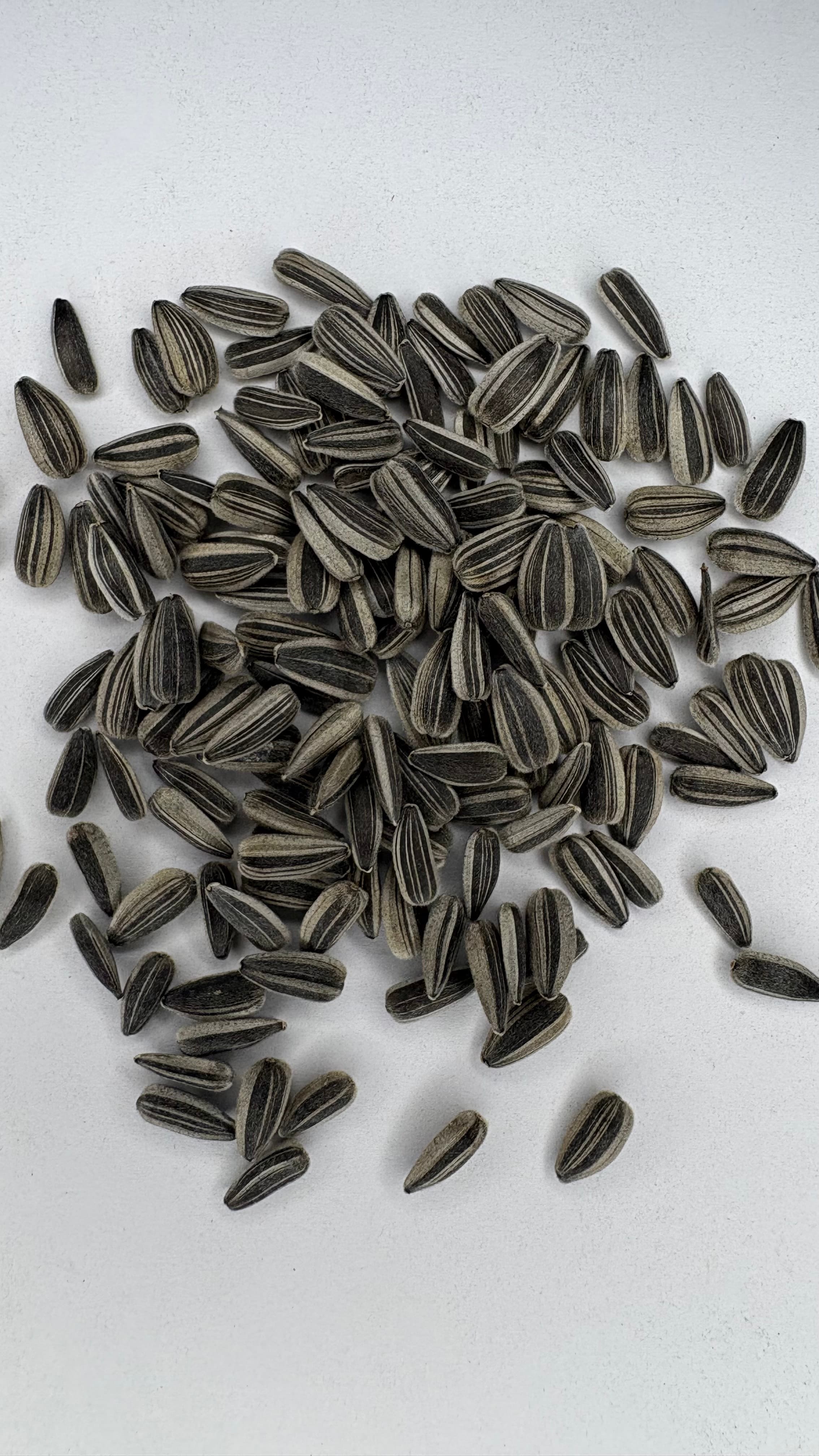
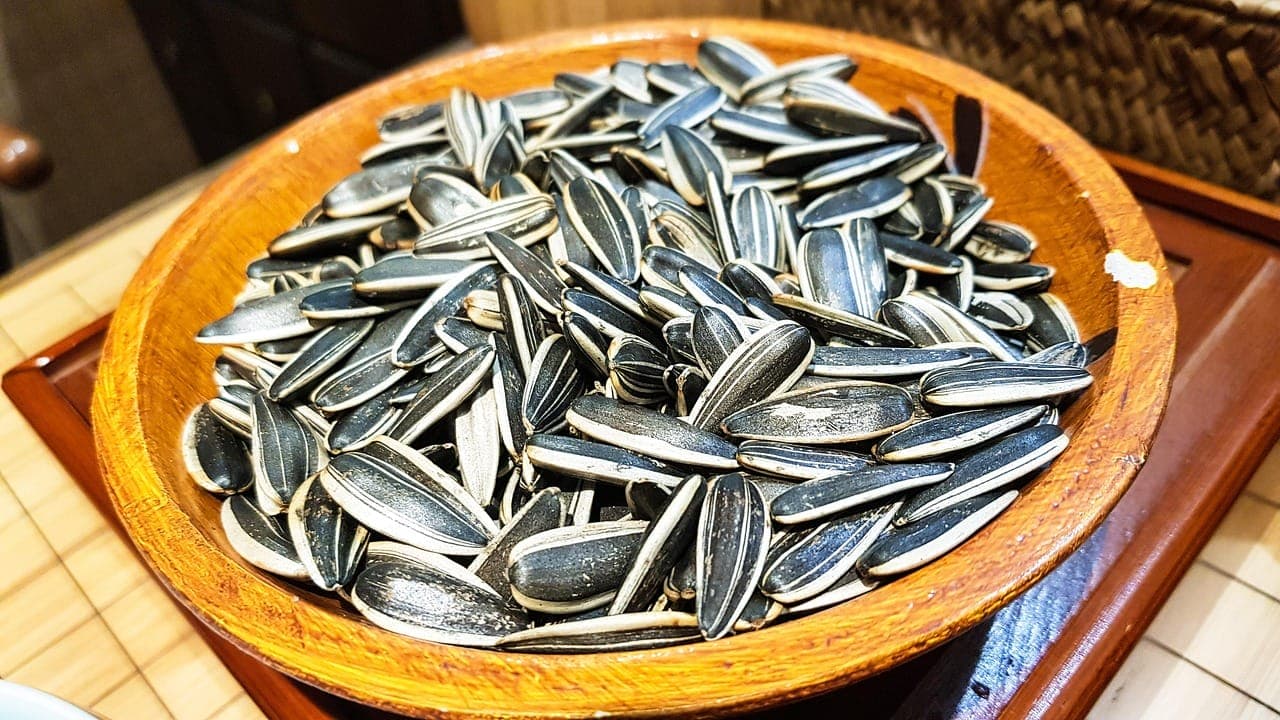
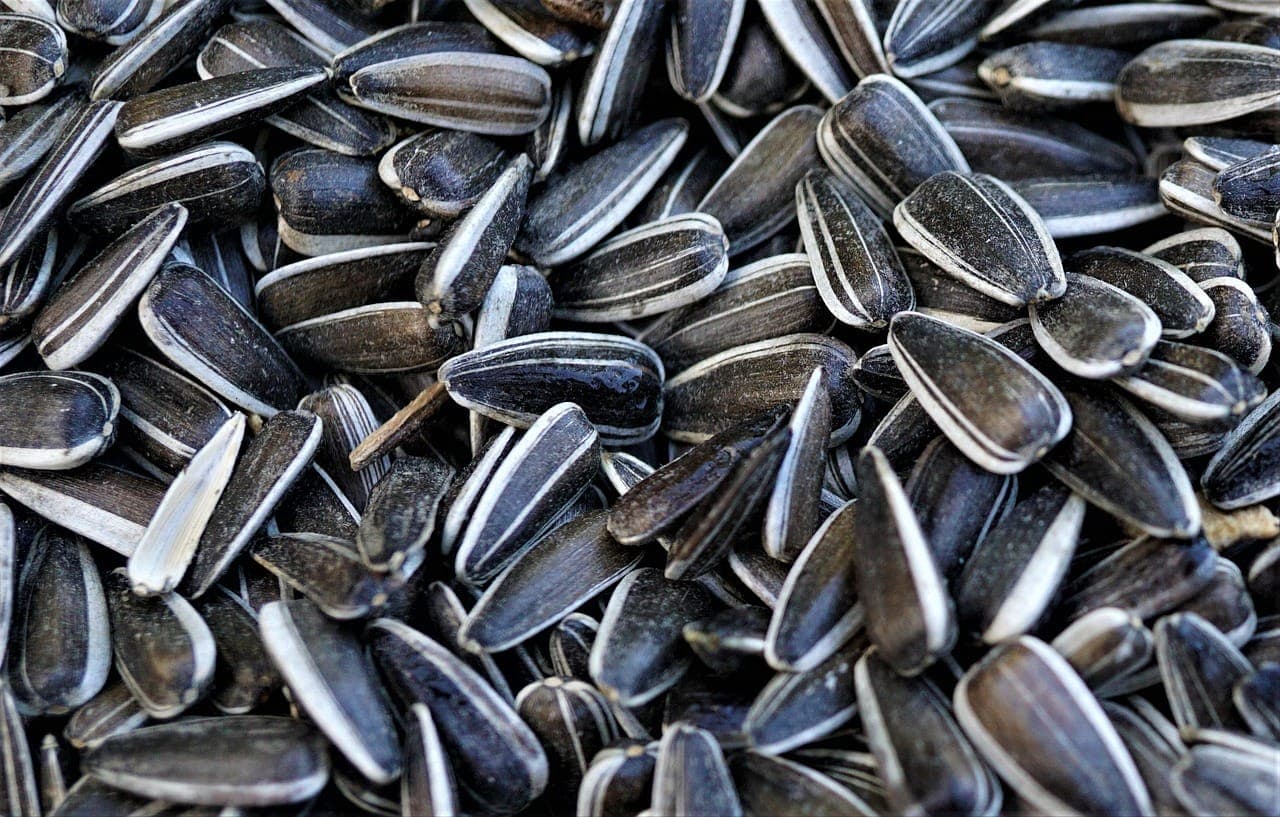
Striped Linoleic Sunflower Hybrid
Key advantages
- Distinctive striped pattern meets confectionery market standards
- Large seed size optimized for in-shell snack markets
- High test weight and uniform grading at harvest
- Disease resistance packages for reliable production
Striped High Oleic Sunflower Seeds
Key advantages
- High oleic acid (80%+) combined with attractive striped seed coat
- Dual-purpose potential for confectionery and oil markets
- Superior oxidative stability for food processing applications
- Large, well-filled seeds with consistent quality
LS Starly
High-oleic striped sunflower with IMI tolerance, strong grain quality and multi-market suitability.
LS Lollipop
Striped high-oleic sunflower with strong yield, high oil quality and wide market suitability.
L 25-02 IOS
Striped high oleic hybrid with excellent yield potential and strong oleic acid content.
L 25-01 IOS
Striped high oleic sunflower hybrid with IMI tolerance, strong yield potential and attractive striped seed.
L 15-13 OS – BLUEBIRD
Striped high oleic hybrid with strong grain yield, excellent seed quality and high oleic acid content.
Black Imi Sunflower Hybrid
Key advantages
- Non-GMO imidazolinone tolerance for effective weed and broomrape control
- Black oil seed type with high kernel-to-hull ratio
- Simplified herbicide programs reduce input costs
- Strong agronomic performance under diverse weed pressures
Black Linoleic Sunflower Seeds
Key advantages
- High oil content with standard linoleic fatty acid profile
- Thin black hull maximizes kernel percentage
- Wide adaptability across major sunflower growing regions
- Proven performance for commodity oil production
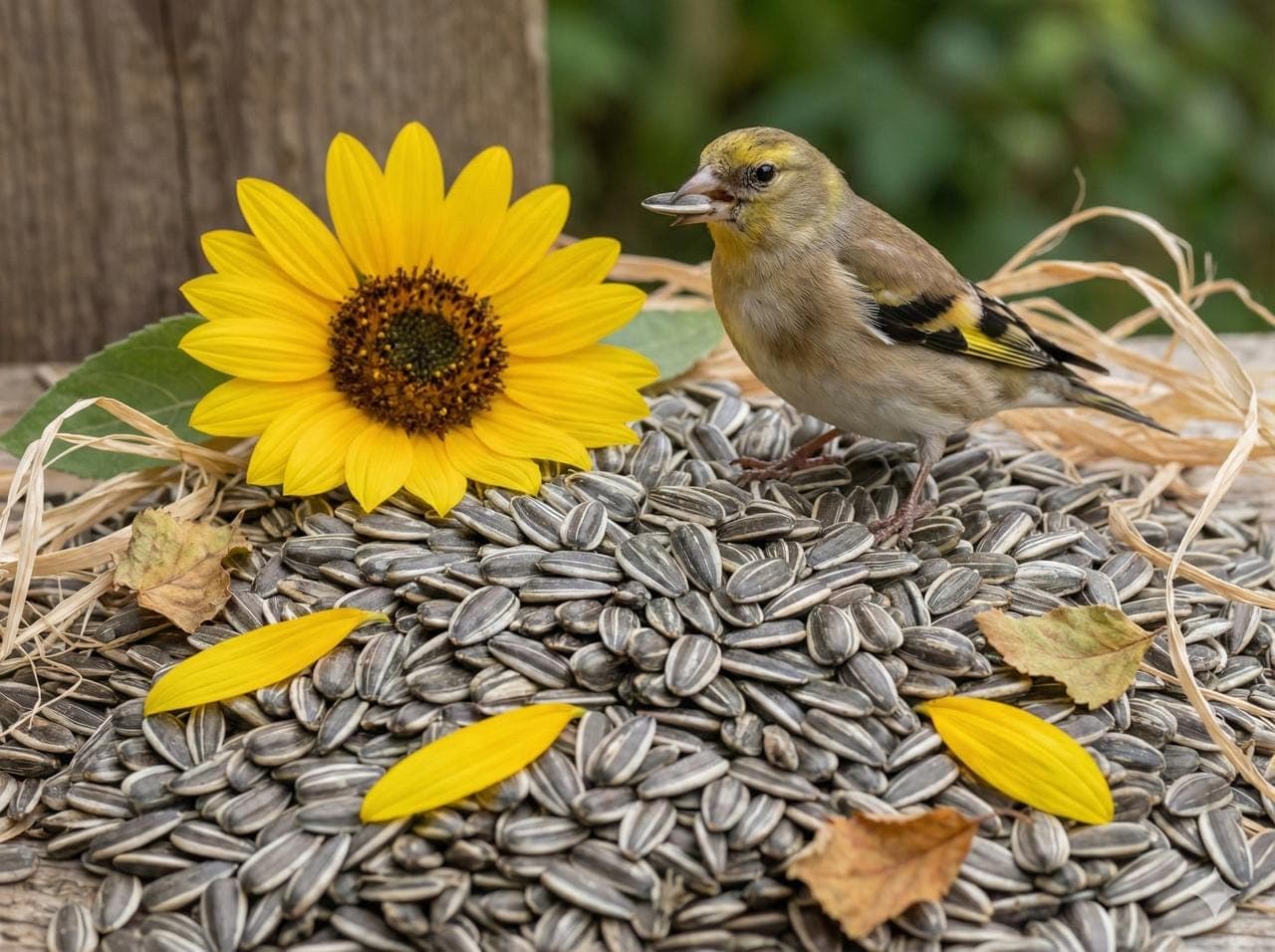
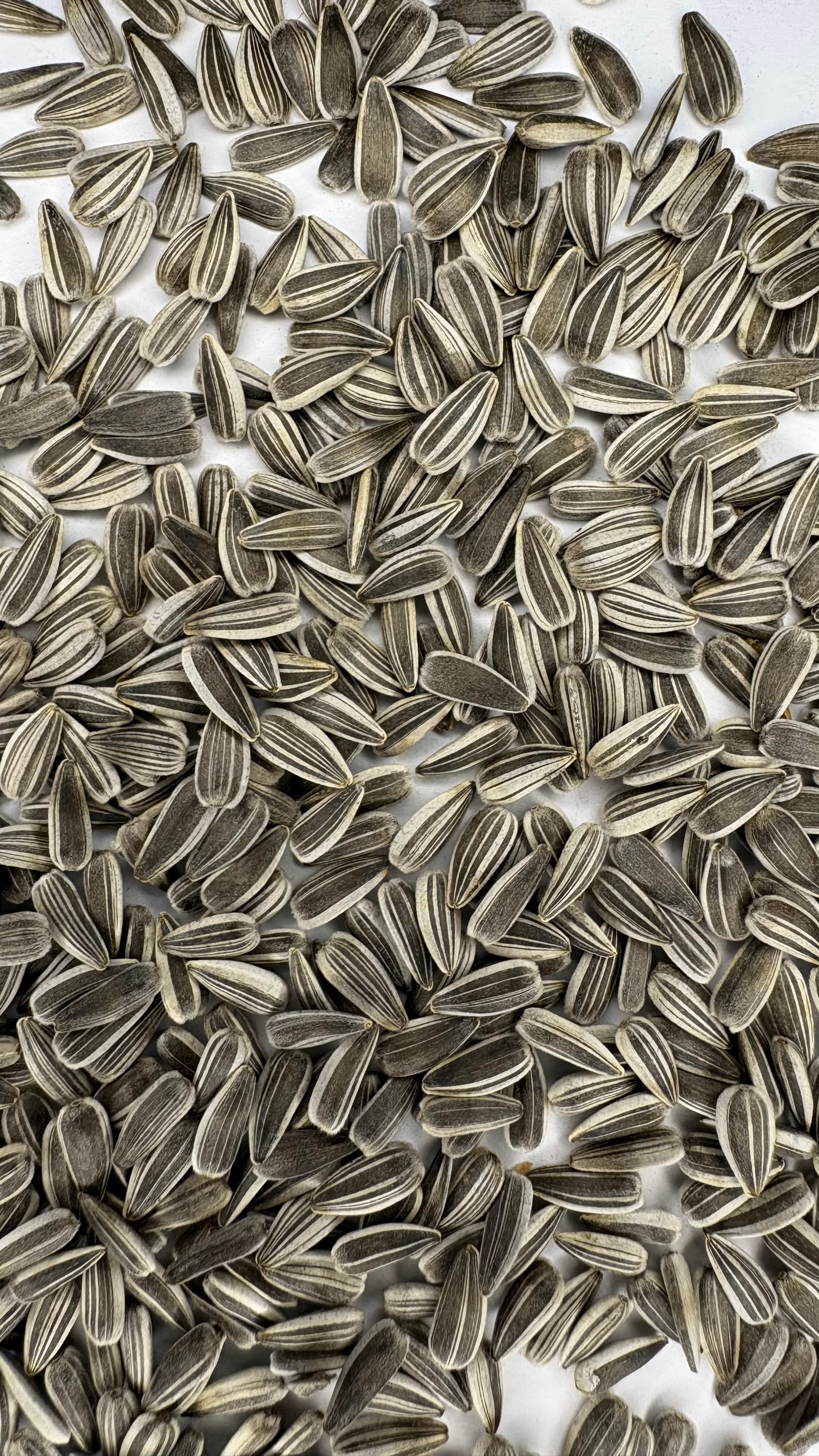
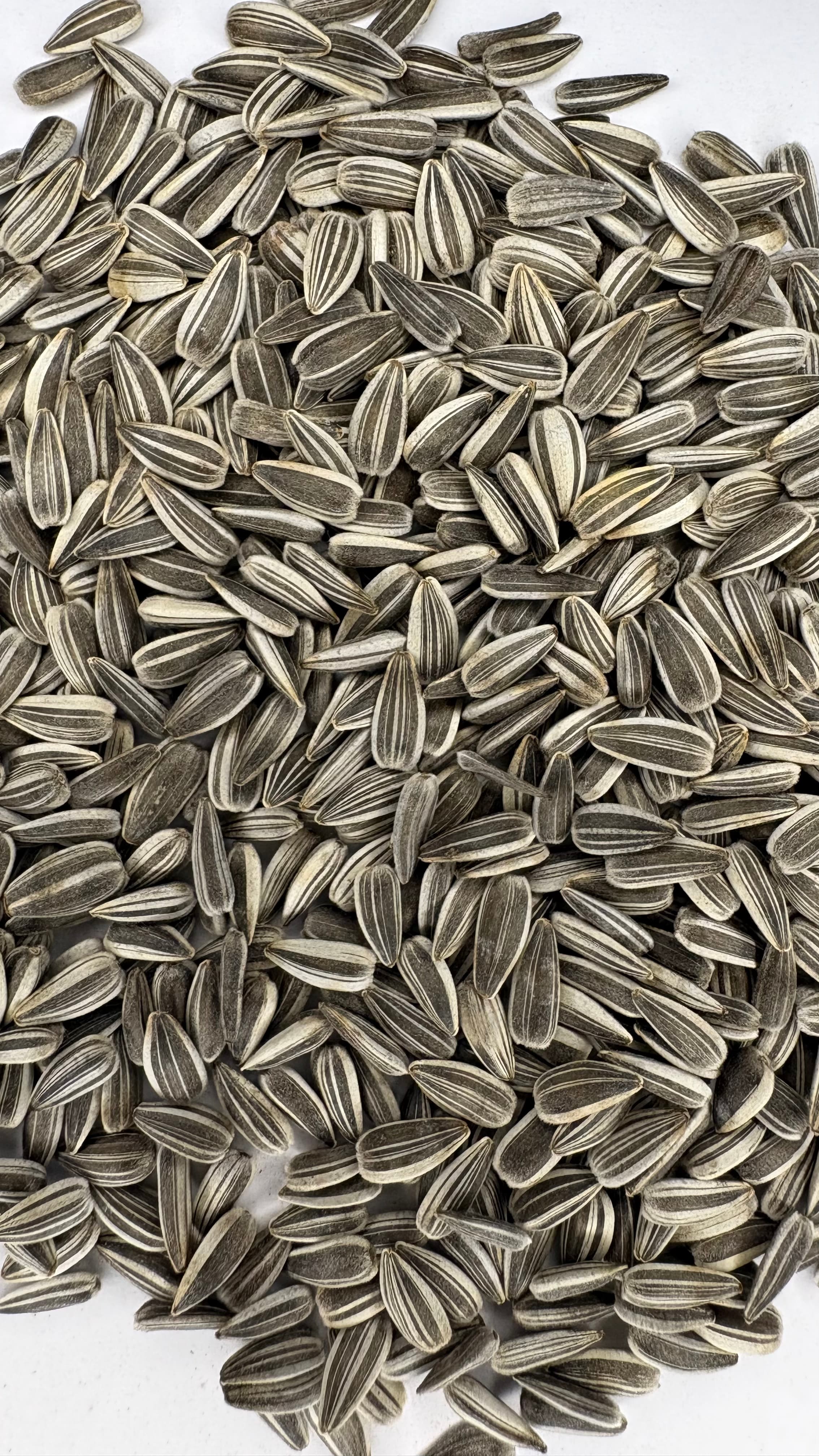
Striped Imi Sunflower Hybrid
Key advantages
- Non-GMO IMI tolerance controls weeds and broomrape effectively
- Large striped seeds ideal for confectionery markets
- High kernel-to-hull ratio for processing efficiency
- Strong standability for clean mechanical harvesting
High Oleic Sunflower Hybrid
Key advantages
- 80-92% oleic acid content
- Superior oil stability and shelf life
- Ideal for frying and industrial applications
- Strong drought tolerance genetics
- No hydrogenation needed — zero trans fats
- Premium market pricing vs. standard sunflower
LS Forsy
High oleic IMI sunflower hybrid with strong agronomic balance and high production potential.
LS Starly
High-oleic striped sunflower with IMI tolerance, strong grain quality and multi-market suitability.
LS Lollipop
Striped high-oleic sunflower with strong yield, high oil quality and wide market suitability.
L 25-02 IOS
Striped high oleic hybrid with excellent yield potential and strong oleic acid content.
L 25-01 IOS
Striped high oleic sunflower hybrid with IMI tolerance, strong yield potential and attractive striped seed.
L 15-13 OS – BLUEBIRD
Striped high oleic hybrid with strong grain yield, excellent seed quality and high oleic acid content.
LS Luminal
High-yield linoleic sunflower with strong disease resistance and wide adaptability.
LS GLOBSUN
High-yielding linoleic sunflower hybrid with strong lodging and mildew tolerance.
LS SWIFT
This early to very early hybrid combines stable productivity with good disease tolerance, making it suitable for bird food, oil and biofuel markets alike.
LS Pickit
Early striped linoleic sunflower with strong yield potential and high-quality grains.
L 24-01 IS
Striped linoleic sunflower hybrid with high seed quality, strong yield and IMI tolerance.
L 22-01 S
Very early striped linoleic hybrid with strong yield potential and attractive seed quality.
Linoleic Sunflower Hybrid
Key advantages
- Rich in polyunsaturated fatty acids (omega-6)
- Versatile oil profile for food-grade markets
- Suited for confectionery and cooking oil
- Stable yields across diverse conditions
- Early to medium maturity options
- Strong field establishment
Black Oil Sunflower Hybrid
Key advantages
- High oil content for maximum extraction
- Thin hulls — superior kernel-to-hull ratio
- Optimized for industrial processing
- Consistent seed uniformity
- Strong agronomic performance
- Adapted to main sunflower production zones
LS Forsy
High oleic IMI sunflower hybrid with strong agronomic balance and high production potential.
LSL18-02 I
Early IMI linoleic sunflower hybrid with excellent grain yield, strong lodging resistance and good oil content.
LS Luminal
High-yield linoleic sunflower with strong disease resistance and wide adaptability.
LS GLOBSUN
High-yielding linoleic sunflower hybrid with strong lodging and mildew tolerance.
LS Starly
High-oleic striped sunflower with IMI tolerance, strong grain quality and multi-market suitability.
LS Lollipop
Striped high-oleic sunflower with strong yield, high oil quality and wide market suitability.
L 25-02 IOS
Striped high oleic hybrid with excellent yield potential and strong oleic acid content.
L 25-01 IOS
Striped high oleic sunflower hybrid with IMI tolerance, strong yield potential and attractive striped seed.
L 15-13 OS – BLUEBIRD
Striped high oleic hybrid with strong grain yield, excellent seed quality and high oleic acid content.
LS SKIPPY
Striped IMI sunflower with safe yield potential, high grain quality and multiple market uses.
LS Glory
Striped IMI sunflower with strong yield, excellent oil potential and solid agronomic behaviour.
LS Colibry
Striped IMI sunflower hybrid with strong grain and oil yield and solid disease tolerance.
LS SWIFT
This early to very early hybrid combines stable productivity with good disease tolerance, making it suitable for bird food, oil and biofuel markets alike.
LS Pickit
Early striped linoleic sunflower with strong yield potential and high-quality grains.
L 24-01 IS
Striped linoleic sunflower hybrid with high seed quality, strong yield and IMI tolerance.
L 22-01 S
Very early striped linoleic hybrid with strong yield potential and attractive seed quality.
Striped Sunflower Hybrid
Key advantages
- Distinctive striped seed-coat pattern
- Large seed size for confection market
- Visual uniformity for premium grading
- Suited for bird-feed and snack markets
- Good de-hulling characteristics
- Reliable field performance
Range overview
Where to grow sunflower
Guides & insights on sunflower
View all articles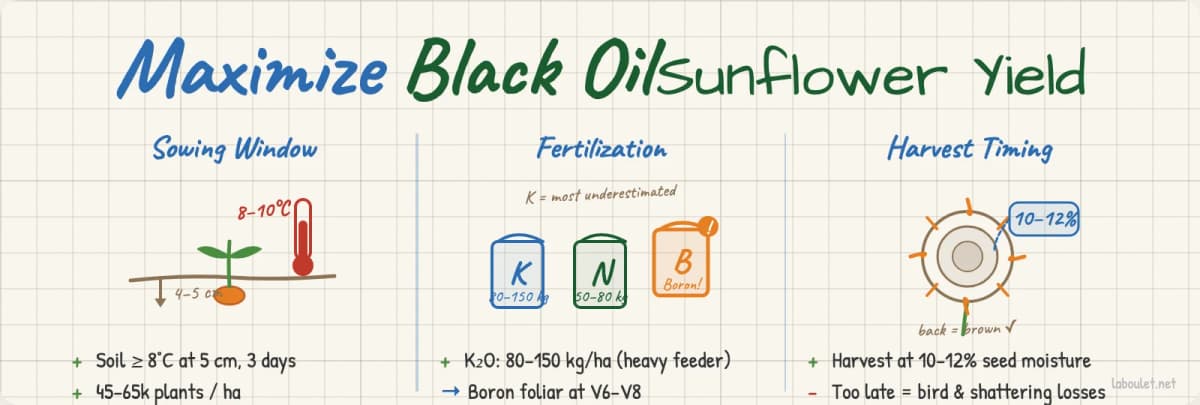
How to Maximize Black Oil Sunflower Yield: Agronomic Tips for Commercial Growers
Black oil sunflower (Helianthus annuus L.) is one of the highest-value oilseed crops available to commercial growers. Its seeds contain 40 to 50 percent oil by dry weight — substantially more than confectionery sunflower varieties — making it the preferred choice for edible oil, biodiesel, and high-energy livestock feeds. Yet black oil sunflower is also […]
Read more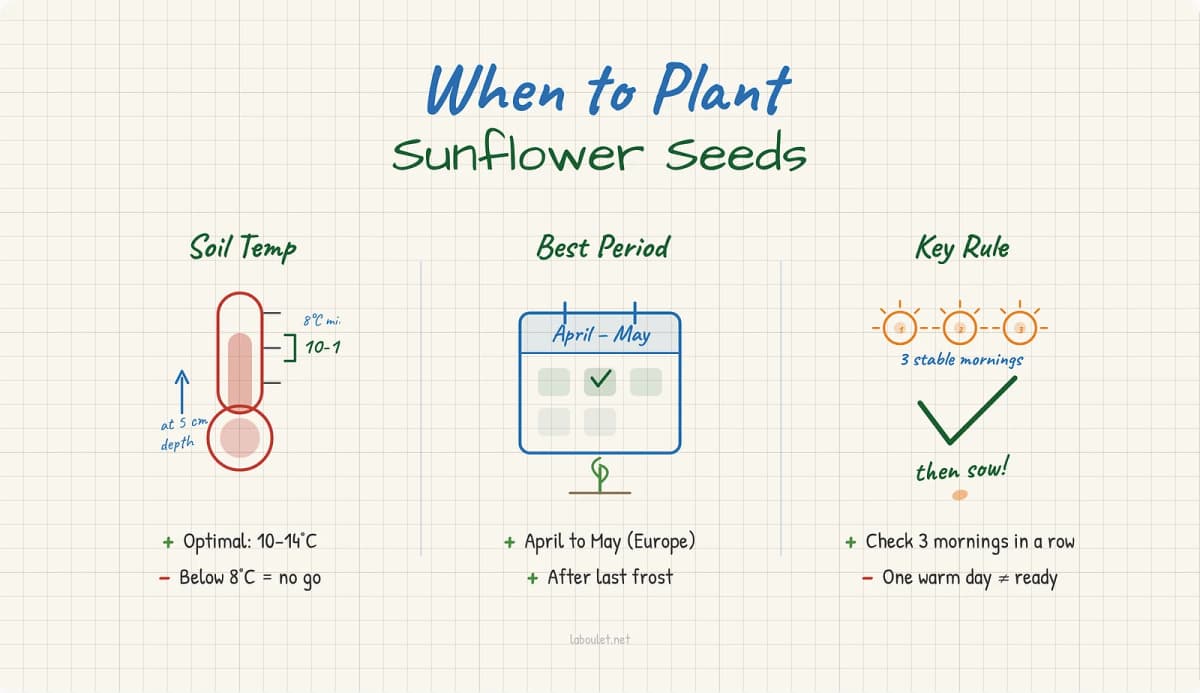
When to Plant Sunflower Seeds: Agronomic Timing for Commercial Growers
Planting date is not a calendar decision. It is an agronomic one. The difference between a productive sunflower crop and a mediocre stand often traces back to a sowing window of just ten to fifteen days. For professional growers, timing sunflower planting means reconciling soil temperature, varietal cycle length, downstream market requirements and regional climate […]
Read more
Where to Buy Sunflower Seeds for Planting
Choosing where to buy sunflower seeds for planting is not a simple sourcing question.It is an agronomic decision that conditions crop performance, market access, and production regularity over the season. Sunflower is grown across multiple filières: oilseed crushing, grain markets, animal feed, bird feed, forage, and occasionally as a cover crop.Each outlet imposes different varietal expectations, tolerance […]
Read moreHybrid sunflower seeds in modern cropping systems
Hybrid sunflower seeds are central to modern oilseed production, combining genetic vigour with uniform field behaviour. When they are positioned correctly in the rotation, our hybrid sunflower seeds contribute to stable yields, controlled vegetative growth and predictable harvest dates.
By relying on structured breeding and selection, our varieties express consistent emergence, balanced plant architecture and homogeneous maturity. This technical profile allows producers to integrate hybrid sunflower into diverse rotations while maintaining a clear view of agronomic risk and workload distribution.
Laboulet’s varietal development and seed production expertise
Laboulet develops hybrid sunflower seeds through a varietal-creation approach that combines genetic selection, experimental networks and strict seed production protocols. Our varieties are defined by clear breeding objectives such as earliness, yield potential, disease tolerance and oil profile, then validated through multi-site and multi-year trials.
Seed production is organised to secure genetic purity and physiological quality: parental lines are multiplied under controlled conditions, hybridisation is managed with adapted isolation distances, and seed lots are conditioned and tested for germination, purity and sizing. This process ensures that our hybrid sunflower seeds enter our ranges with stable field behaviour and reliable technical characteristics.
Key criteria for selecting hybrid sunflower seeds
Yield performance and productivity
Yield remains the primary criterion when selecting hybrid sunflower seeds for professional use. Productive hybrids combine vigorous early growth, efficient biomass distribution, well-structured heads and regular seed fill, all of which contribute to performance under both favourable and constrained environments.
Our varieties are assessed across numerous sites and years to measure yield level and stability, with attention to plant population, seeds per head, thousand-seed weight and final oil yield. This network-based evaluation ensures that the hybrids integrated into our ranges match the expectations of producers seeking consistent performance.
- Stable yield potential across variable seasons when agronomic practices are well controlled
- Head architecture suited to efficient seed fill and uniform grain size
- Expression of yield with balanced vegetative growth to limit lodging risk
- Adaptation to both medium and higher potential soils within the same technical framework
Early-cycle behaviour and adaptation
Precocity is a key factor in managing climatic and operational risks. Early-cycle hybrids allow earlier harvest, reduced exposure to late-season stress and better integration into intensive rotations that include other early or late crops.
Within our ranges, early-cycle behaviour is defined by rapid emergence, controlled vegetative phases and timely flowering and grain maturity. This profile helps producers adjust sowing dates and harvest windows while limiting exposure to summer heat peaks and late disease pressure.
- Suitability for early sowing where soil temperature permits rapid emergence
- Reduced exposure to high-temperature periods during flowering and grain fill
- Better synchronisation with subsequent crops in intensive rotations
Agronomic quality and structural traits
A hybrid’s technical value extends beyond its yield potential. Structural characteristics such as stem strength, plant height, root architecture and head position influence lodging risk, disease behaviour and the ease of mechanical operations.
Our hybrid sunflower seeds are selected to provide firm stems, balanced plant height and regular head positioning, thereby supporting harvesting efficiency and limiting physical damage. Combined with uniform flowering, these traits contribute to homogeneous grain maturity and more predictable harvest conditions.
- Stem robustness for reduced lodging and better standability at harvest
- Balanced plant height adapted to mechanical harvesting equipment
- Uniform flowering pattern that supports even maturity
- Root system architecture designed to explore soil volume efficiently
Rotation fit and soil conditions
Hybrid sunflower seeds must be integrated into rotations in a way that respects soil structure, organic matter dynamics and nutrient balance. The crop’s rooting system and residue profile can contribute positively to soil condition when rotations are properly designed.
Our varieties are evaluated in diverse agronomic configurations, including combinations with cereals, legumes and other oilseeds. This work helps specify the soils and previous crops for which our ranges are particularly well suited, and guides the design of rotations that optimise both productivity and soil durability.
Hybrid sunflower solutions developed by Laboulet
Structure and positioning of our hybrid sunflower ranges
Our hybrid sunflower seeds are organised into ranges according to maturity group, agronomic profile and target use. This structure allows producers and advisors to identify hybrids that correspond to their climate, soil types and rotation strategies.
Within our ranges, hybrids are differentiated by earliness, growth habit, head structure and oil potential. This segmentation makes it possible to select a variety that aligns with specific objectives, whether they relate to early harvest, high yield in high-potential contexts or regularity under more constrained conditions.
- Ranges differentiated by maturity group and agronomic profile
- Hybrids adapted to both early and standard sowing periods
- Varieties designed for consistent behaviour in varied soil structures
Disease and stress tolerance in our varieties
Sunflower production is exposed to several major diseases and stress factors, which can significantly affect yield and oil quality. Genetic tolerance is therefore a central component of hybrid development and of the way our varieties are positioned.
Our hybrid sunflower seeds integrate tolerance profiles against key diseases and are evaluated under high-pressure conditions to characterise their behaviour. These traits complement agronomic practices such as rotation design and residue management, helping producers manage risk over multiple seasons.
- Varietal profiles integrating tolerance to common sunflower diseases
- Evaluation of our varieties in zones with significant disease pressure
- Inclusion of stress-response traits to support stable performance
Oil quality and market expectations
Oil content and oil composition are decisive for the economic performance of sunflower crops. Hybrid sunflower seeds are selected not only for yield but also for their ability to deliver regular oil content that fits market requirements.
Our ranges include hybrids positioned for oil yield and quality, with attention to the stability of oil content across conditions. This approach supports producers who operate under contract or who seek to secure premium opportunities linked to specific oil profiles.
Agronomic practices to maximise hybrid sunflower performance
Soil preparation and sowing windows
A well-prepared seedbed is essential for hybrid sunflower seeds to express their vigour. Fine, firm soil structure, appropriate moisture and accurate sowing depth support even emergence and root development during the first weeks after sowing.
Recommended sowing windows depend on local climate, but a common principle is to wait for soil temperatures compatible with rapid germination while maintaining sufficient moisture. Plant density is adjusted according to soil potential and water availability, with moderate densities in lower-potential or water-limited contexts.
- Seedbed prepared to favour uniform emergence and root penetration
- Sowing depth typically within a controlled and moderate range
- Plant densities adapted to soil potential and expected water supply
Fertilisation and nutrient management
Balanced nutrition is necessary to sustain the reproductive structure of hybrid sunflower plants. Nitrogen must be supplied carefully to avoid excessive vegetative growth, while phosphorus and potassium support rooting, stem strength and seed fill.
Micronutrients, particularly boron, play an important role in flowering and grain formation. Within our agronomic solutions, fertilisation strategies are designed as a function of soil analysis, rotation history and yield targets, in order to match the technical potential of our hybrid sunflower seeds.
- Nitrogen input aligned with yield goals and lodging risk
- Phosphorus and potassium provision adapted to soil reserves
- Use of soil or tissue analysis to refine nutrient management
Crop protection and disease management
Genetic tolerance in our varieties is an essential element of risk management but does not replace integrated crop protection. Combining varietal choice with adapted rotations, hygiene measures and, where necessary, targeted interventions helps control disease and weed pressure.
Our agronomic solutions describe how to associate hybrid sunflower seeds with rotations that limit inoculum carryover, how to manage crop residues and how to monitor fields at sensitive stages. This integrated approach supports long-term performance and reduces the likelihood of significant yield losses.
- Use of rotations to reduce disease pressure and maintain soil health
- Observation of key crop stages for early detection of issues
- Combination of varietal tolerance and field hygiene for durable control
Harvest timing and post-harvest management
Harvest timing plays a decisive role in preserving grain quality and oil yield. Uniform maturity of hybrid sunflower plants simplifies this decision, as producers can rely on consistent head and grain condition across the field.
Visual indicators such as bract colour and seed appearance must be complemented, when possible, by moisture measurements. Post-harvest, careful handling and adapted storage conditions are important to protect grain integrity and prevent quality losses during the marketing period.
- Monitoring head and grain appearance to determine the harvest window
- Adjustment of machinery settings to match grain size and moisture
- Preservation of grain quality through appropriate drying and storage
Comparative view: hybrid sunflower seeds and conventional material
Yield and risk comparisons
Compared with conventional or older sunflower material, hybrid sunflower seeds generally provide higher yield potential and improved stability. This difference is linked to heterosis, better uniformity and the integration of disease and stress-tolerance traits.
In return, hybrids require seed investment that is higher per unit than traditional seed. When agronomy is well mastered, the additional yield and risk reduction usually compensate for this cost, resulting in improved gross margins over time.
- Higher average yield potential than older, non-hybrid material
- Improved yield stability across contrasting seasons
- More predictable oil content and quality
- Seed cost offset by agronomic and economic performance
Operational and technical differences
Hybrid sunflower seeds are associated with more uniform stands and maturity, which simplifies many operations, particularly harvest. However, this technical potential is fully expressed only when sowing precision, fertilisation and crop protection are carefully managed.
Our hybrid sunflower seeds are thus best suited to systems in which producers or advisers implement structured decision-making based on soil analysis, rotation planning and regular field observation. In such contexts, the agronomic profile of our varieties supports efficient, predictable operations.
Reasons to rely on Laboulet for hybrid sunflower seeds
Laboulet has a long-standing presence in seeds, fertilizers and agronomic support, with activity centred on varietal creation and seed production for oilseeds, legumes and other crops. This experience underpins the development of our hybrid sunflower seeds and the way they are positioned within our ranges.
Our varieties are integrated into a complete technical framework that includes seed quality criteria, adaptability testing and agronomic guidance. Through our agronomic solutions, we help producers match hybrids to their soils, climates and rotation strategies, and to manage the crop consistently from sowing to harvest.
- Breeding expertise focused on early-cycle and productive hybrid sunflower profiles
- Seed production standards designed to secure germination, purity and sizing
- Ranges structured to cover diverse agronomic contexts and objectives
- Agronomic solutions that support decisions on fertilisation, protection and rotation
Key questions about hybrid sunflower seeds
What defines a hybrid sunflower seed compared with a conventional variety?
A hybrid sunflower seed results from controlled crossing between selected parental lines, producing offspring that combine heterosis, uniformity and a specific agronomic profile. In our varieties, this profile is defined through breeding and field testing before the seed is integrated into our ranges.
How do our hybrid sunflower seeds generally perform in terms of yield and oil content?
Under well-managed conditions, our hybrid sunflower seeds are designed to deliver robust yield potential and regular oil content, with performance levels aligned to the maturity group and agronomic positioning of each variety. Yield and oil results depend on soil potential, climate and the implementation of appropriate agronomic practices.
Which soil and climate conditions are best suited to our hybrid sunflower seeds?
Our varieties are suited to well-structured, drained soils with adequate fertility, in climates offering sufficient heat to complete the cycle while avoiding prolonged extreme stress. Within these broad conditions, different hybrids in our ranges target specific zones, from temperate to more continental or Mediterranean environments.
How should plant density and sowing dates be adjusted for our varieties?
Plant density for our hybrid sunflower seeds is set according to soil potential and expected water availability, with moderate densities in more constrained contexts and higher densities where water and nutrients are not limiting. Sowing dates are adjusted based on soil temperature and local climate to secure rapid emergence and a flowering period outside the most critical stress phases.
What role do disease-tolerance traits in our ranges play in risk management?
Disease-tolerance traits built into our varieties help contain losses in seasons or zones where pressure from major pathogens is significant. They do not replace agronomic practices but complement rotation design, residue management and general crop protection strategies within our agronomic solutions.
How can our agronomic solutions help adapt hybrids to intensive rotations?
Our agronomic solutions integrate information on earliness, residue behaviour and nutrient requirements of our hybrid sunflower seeds, allowing them to be placed in rotations that also include cereals, legumes and other oilseeds. This approach helps maintain soil balance while ensuring that the timing of operations remains compatible with each crop’s technical needs.
What are the main differences in management between hybrid sunflower seeds and older types?
Hybrid sunflower seeds generally require more precise sowing, fertilisation and monitoring to make full use of their potential. In return, our varieties provide uniform stands, predictable maturity and structured disease-tolerance profiles, which simplify certain operations and support consistent performance when management is well controlled.
How do producers integrate our hybrid sunflower seeds in their crop rotation over several years?
Producers typically position our hybrid sunflower seeds in rotations that alternate with cereals, legumes or other oilseeds to manage disease pressure and maintain soil structure. Over several years, adjustments to variety choice within our ranges and to agronomic practices allow the system to remain productive while respecting the constraints of each field.
For growers evaluating hybrid solutions across different crops, our hybrid castor beans and hybrid corn seeds offer additional benchmarks, following the same approach to varietal development with consistent productivity and early-cycle behavior under varied field conditions.