
Black Oil Sunflower Hybrid for professional growers worldwide
High oil content varieties with thin hulls optimized for efficient oil extraction
Key advantages
Black Oil Sunflower Hybrid
LS Forsy
High oleic IMI sunflower hybrid with strong agronomic balance and high production potential.
LSL18-02 I
Early IMI linoleic sunflower hybrid with excellent grain yield, strong lodging resistance and good oil content.
LS Luminal
High-yield linoleic sunflower with strong disease resistance and wide adaptability.
LS GLOBSUN
High-yielding linoleic sunflower hybrid with strong lodging and mildew tolerance.
Compare varieties
| Variety | Oil profile | Herbicide tolerance | Earliness | Use | Yield potential |
|---|---|---|---|---|---|
| LS Forsy | Oleic | IMI | Semi-early | Oil and biofuel | 9/10 |
| LSL18-02 I | Linoleic | IMI | Early | Crushing | 10/10 |
| LS Luminal | Linoleic | — | Early | Crushing | 10/10 |
| LS GLOBSUN | Linoleic | — | Early | Crushing | 9/10 |
See the full range: Hybrid sunflower seeds →
Where to grow sunflower
Guides & insights on sunflower
View all articles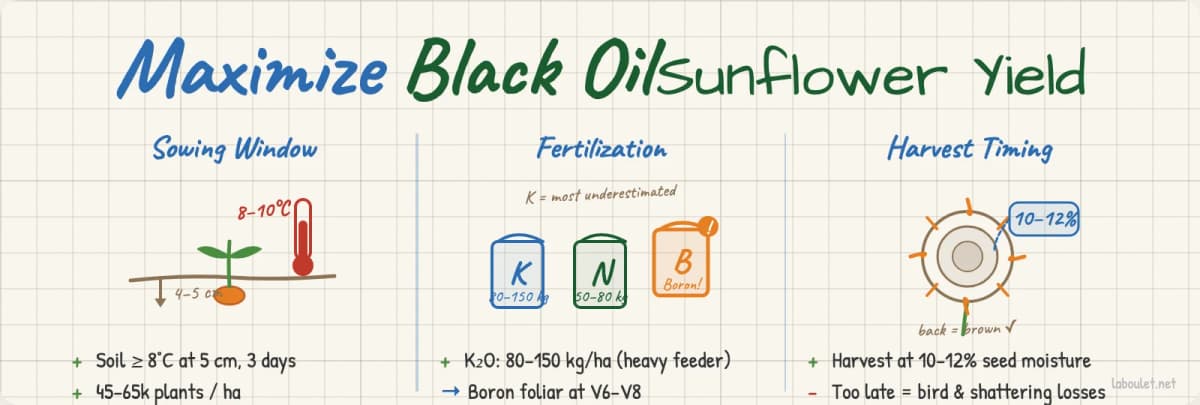
How to Maximize Black Oil Sunflower Yield: Agronomic Tips for Commercial Growers
Black oil sunflower (Helianthus annuus L.) is one of the highest-value oilseed crops available to commercial growers. Its seeds contain 40 to 50 percent oil by dry weight — substantially more than confectionery sunflower varieties — making it the preferred choice for edible oil, biodiesel, and high-energy livestock feeds. Yet black oil sunflower is also […]
Read more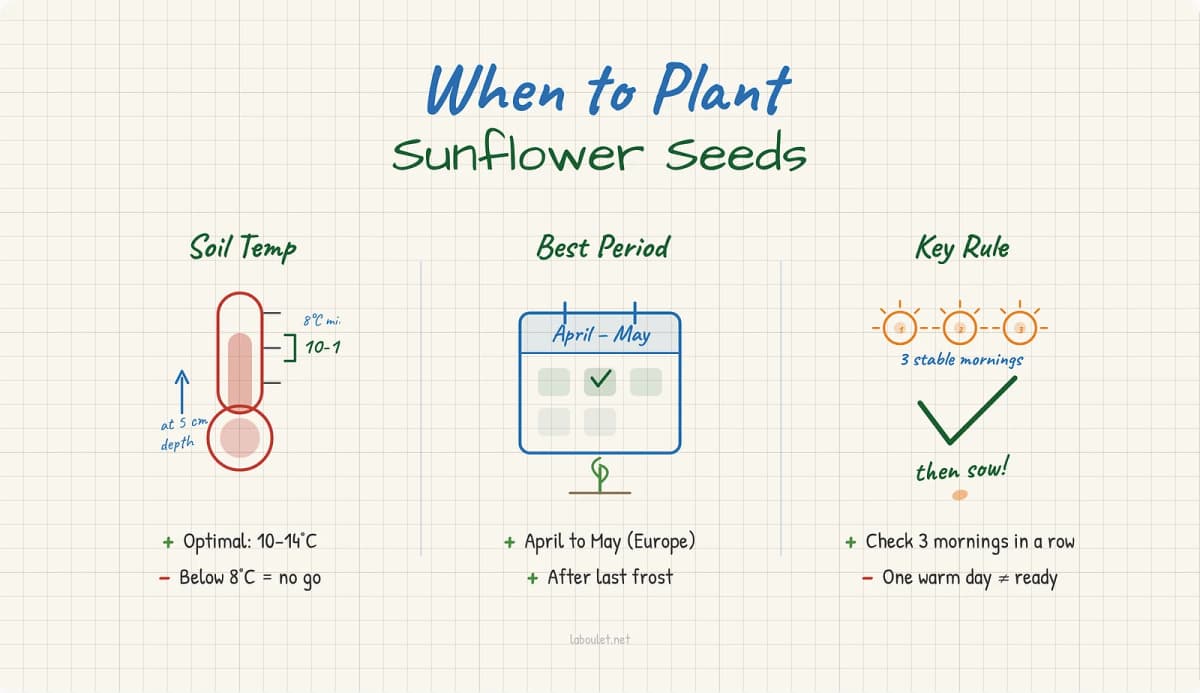
When to Plant Sunflower Seeds: Agronomic Timing for Commercial Growers
Planting date is not a calendar decision. It is an agronomic one. The difference between a productive sunflower crop and a mediocre stand often traces back to a sowing window of just ten to fifteen days. For professional growers, timing sunflower planting means reconciling soil temperature, varietal cycle length, downstream market requirements and regional climate […]
Read more
Where to Buy Sunflower Seeds for Planting
Choosing where to buy sunflower seeds for planting is not a simple sourcing question.It is an agronomic decision that conditions crop performance, market access, and production regularity over the season. Sunflower is grown across multiple filières: oilseed crushing, grain markets, animal feed, bird feed, forage, and occasionally as a cover crop.Each outlet imposes different varietal expectations, tolerance […]
Read moreDefining black oil sunflower seeds
Black oil sunflower seeds are characterised by their dark seed coat and high oil content, making them a reference type for oil extraction and specialised seed markets. Their thin hull improves kernel-to-hull ratio, supporting efficient oil processing and nutritional value in bird-feed formulations.
Within our varieties, these seeds are selected to ensure consistent colour, uniform seed size and reliable agronomic expression. Our seeds differ from striped or confectionary types by focusing on oil yield, processing efficiency and stable production under a wide range of field conditions.
Agronomic and market advantages of our black oil sunflower seeds
Oil content, seed quality and versatility
Black oil sunflower seeds are valued for their elevated oil percentage and thinner hull, which support efficient extraction and balanced kernel composition. Our varieties are developed for uniform grain fill, regular head structure and predictable maturity, helping growers achieve consistent oil yield.
- High kernel-to-hull ratio for efficient processing
- Stable oil content across variable growing conditions
- Seed quality adapted to industrial and speciality markets
Adaptation to oilseed and bird-feed markets
These seeds are widely used in oilseed production and are also preferred in bird-feed due to their thin hull and high nutritional value. Our seeds are designed to serve both industrial processors and niche operators requiring predictable seed characteristics.
- Dual suitability for oil extraction and bird-feed production
- Consistent seed size improving feed-mixing operations
- Uniform appearance supporting specialised market requirements
Uniformity, yield stability and seed-production benefits
Our varieties offer reliable emergence, balanced vegetative growth and steady behaviour across seasons. This stability supports seed producers and growers seeking predictable performance in diverse agronomic environments.
- Regular emergence and early-cycle stability
- Uniform plant architecture supporting field operations
- Seed-production characteristics aligned with purity and traceability needs
Production standards within our ranges
To guarantee seed quality, our seeds are produced under strict purity and identity conditions. Seed lots undergo detailed checks to ensure germination capacity, varietal stability and correct seed sizing. This integrated seed-production approach supports technical reliability from field to storage.
Our ranges are organised to address different agronomic environments and oil-yield targets. Each seed lot is conditioned to meet professional expectations for cleanliness, uniformity and predictable performance.
- Quality-controlled multiplication protocols
- Seed-lot conditioning ensuring uniform sizing
- Purity and germination verified through internal procedures
Cultivation recommendations for black oil sunflower seed production
Site selection and sowing strategy
Black oil sunflower seeds respond well to well-drained soils with moderate fertility. Seedbeds should be prepared to secure good seed-soil contact, and sowing depth must remain controlled for uniform emergence. Plant density can be adapted to soil potential and targeted oil yield.
- Best performance in moderate, well-drained soils
- Sowing when soil conditions favour rapid, even emergence
- Density adjustments based on soil potential and climate
Crop management for nutrition and protection
Balanced fertilisation supports oil accumulation and head development. Nitrogen should be managed to avoid excessive vegetative growth, while phosphorus and potassium help optimise root development and seed formation. Integrated protection strategies complement tolerance levels within our varieties to maintain healthy crop development.
- Moderate nitrogen aligned with yield and lodging risk
- Phosphorus and potassium supporting root and grain formation
- Monitoring sensitive stages for disease and pest control
Harvest and post-harvest operations
Harvest timing is essential to preserve oil quality and seed integrity. Uniform maturity within our varieties helps growers plan operations accurately. Post-harvest drying and storage must maintain seed hygiene, moisture stability and kernel quality for industrial or specialty markets.
- Harvesting when seeds reach consistent maturity
- Adjusting equipment to protect seed integrity
- Drying and storage in well-ventilated, clean conditions
Comparing our black oil sunflower seeds with other sunflower seed types
Technical and agronomic differences
Black oil sunflower seeds differ from striped or confectionary seeds in kernel composition, hull thickness and market role. Our seeds are developed for high oil yield and efficient processing, while other types may prioritise appearance, seed size or specialty markets.
- Higher oil content than striped or confectionary types
- Thinner hull improving processing efficiency
- Different market positioning compared to non-oil types
Operational considerations for growers
Black oil sunflower seeds can require different density planning and nutrient strategies compared with larger-seed types. Within our agronomic solutions, growers receive guidance to align sowing, fertilisation and harvest practices with the technical requirements of oilseed production.
- Density calibrated for oilseed objectives
- Fertilisation aligned with oil accumulation goals
- Operational efficiency supported by uniform plant structure
Why growers choose our varieties
Our varieties benefit from structured R&D focused on productive, early-cycle and stable oilseed traits. Through our seed-production processes, we ensure purity, physiological quality and consistent behaviour, allowing producers to trust the technical reliability of our seeds.
Our agronomic solutions complement seed supply by providing guidance on soil preparation, nutrition and crop protection. Our ranges are structured to serve multiple agronomic contexts while maintaining a high standard of performance for oilseed sunflower production.
- Dedicated varietal creation for oilseed performance
- Seed quality assured by controlled production pathways
- Agronomic solutions supporting technical decision-making
- Ranges adapted to varied climates and soil conditions
Common questions about black oil sunflower seeds
What distinguishes black oil sunflower seeds from other sunflower types?
Black oil sunflower seeds are defined by their darker hull and higher oil content. Our seeds focus on oil yield and processing efficiency, differing from striped or confectionary types that prioritise seed size or visual traits.
Which markets benefit from black oil sunflower seeds?
They are widely used in oil extraction and increasingly serve bird-feed markets thanks to favourable kernel composition. Our varieties are developed to support both sectors.
What agronomic conditions favour performance?
These seeds perform well in well-drained soils with balanced nutrition. Our agronomic solutions help growers refine sowing, fertilisation and protection strategies.
How should growers select a variety within our ranges?
Choice depends on soil type, climate and target market. Our ranges include varieties designed for different agronomic contexts and production objectives.
What crop management practices optimise yield and oil content?
Balanced nitrogen, adequate phosphorus and potassium, and careful monitoring of sensitive stages support oil accumulation. Our agronomic solutions help plan these actions.
How do costs and returns compare with other sunflower types?
Black oil sunflower seeds may require precise management but offer stronger oil yields and market stability. Many growers find favourable returns when using our varieties.
Can our agronomic solutions support challenging environments?
Yes. Our agronomic solutions assist in adjusting sowing, nutrition and protection to ensure stable performance in diverse or difficult environments.
Producers comparing different sunflower profiles often refer back to our hybrid sunflower seeds while also reviewing high oleic sunflower seeds and linoleic sunflower seeds, two ranges that share similar agronomic traits and usage objectives.