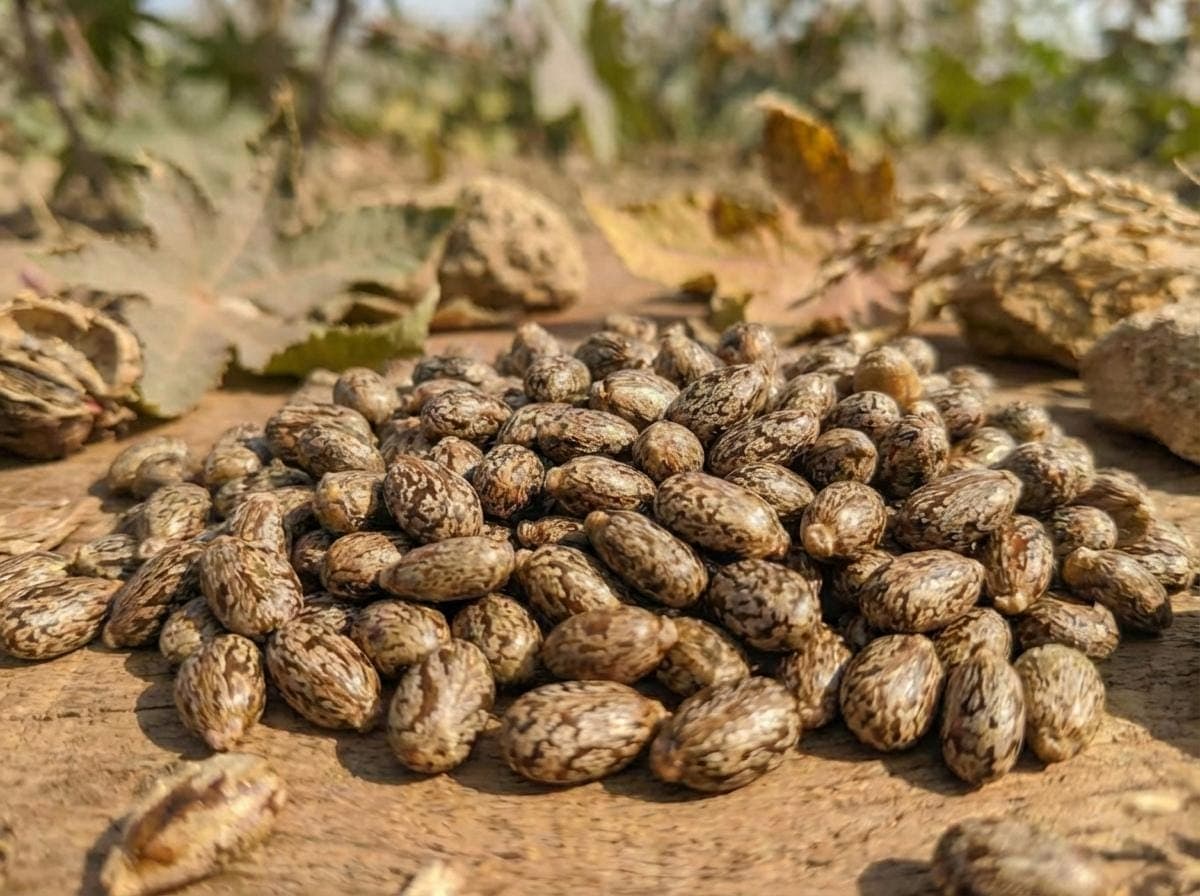
Hybrid castor bean seeds with 48-55% oil content for industrial applications
Dwarf castor bean hybrid with test good yield potential, lodging resistance and regular plant type.
Very early dwarf castor bean hybrid with strong productivity and good adaptability.
Semi-dwarf castor bean hybrid with high yield, early development and strong adaptability.
Giant castor bean with high yield, very tall plants and strong adaptability.
Key advantages
Dwarf castor bean hybrid with test good yield potential, lodging resistance and regular plant type.
Very early dwarf castor bean hybrid with strong productivity and good adaptability.
Semi-dwarf castor bean hybrid with high yield, early development and strong adaptability.
Key advantages
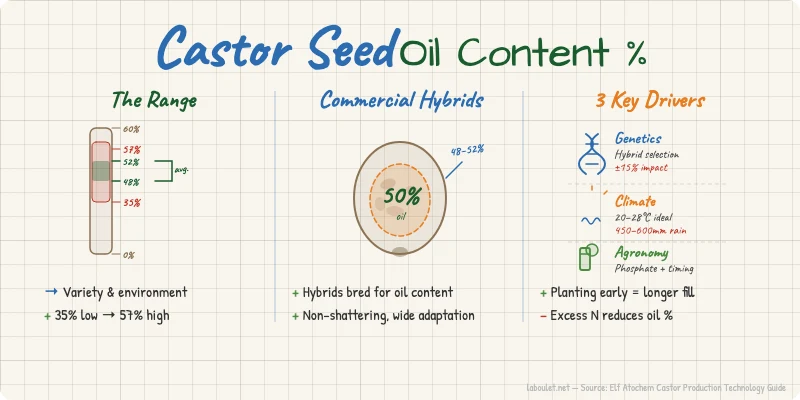
Castor Seed Oil Content Percentage: 35% to 57% — What Drives the Gap? When processors and agronomists evaluate castor as a cash crop, one number dominates every conversation: the oil content percentage of the seed. It determines extraction yields, processing economics, and ultimately the farm gate price. Yet the range found in the literature — […]
Read more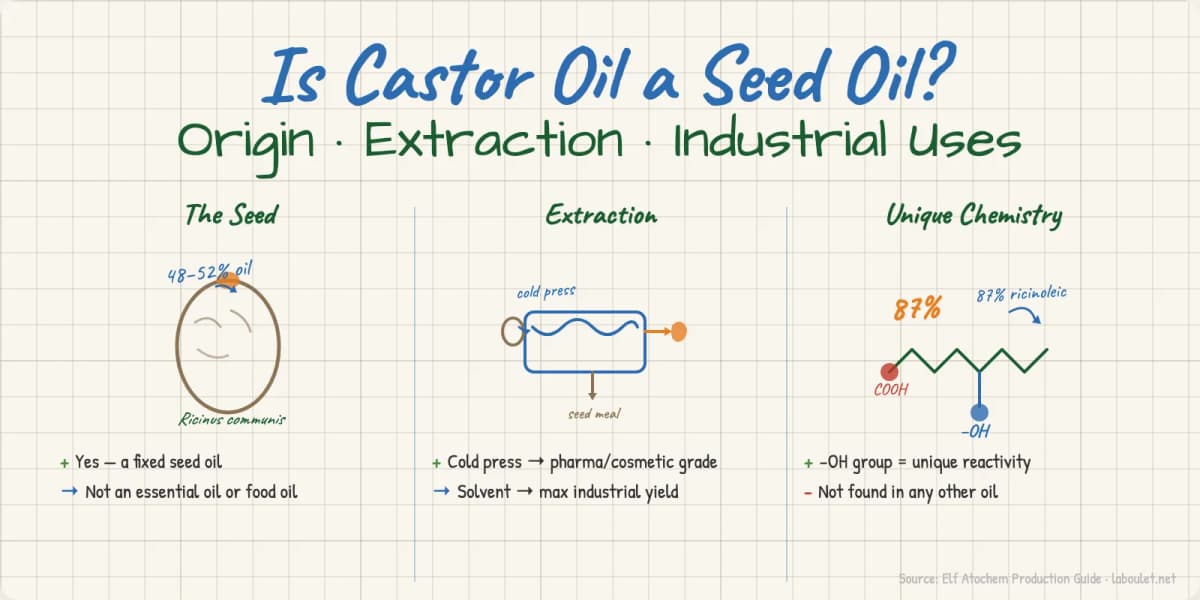
Is Castor Oil a Seed Oil? Origin, Extraction and Industrial Uses The short answer is yes: castor oil is a seed oil. It is extracted from the seeds of Ricinus communis L., the castor bean plant — just as sunflower oil comes from sunflower seeds or soybean oil from soybean seeds. But that similarity ends […]
Read more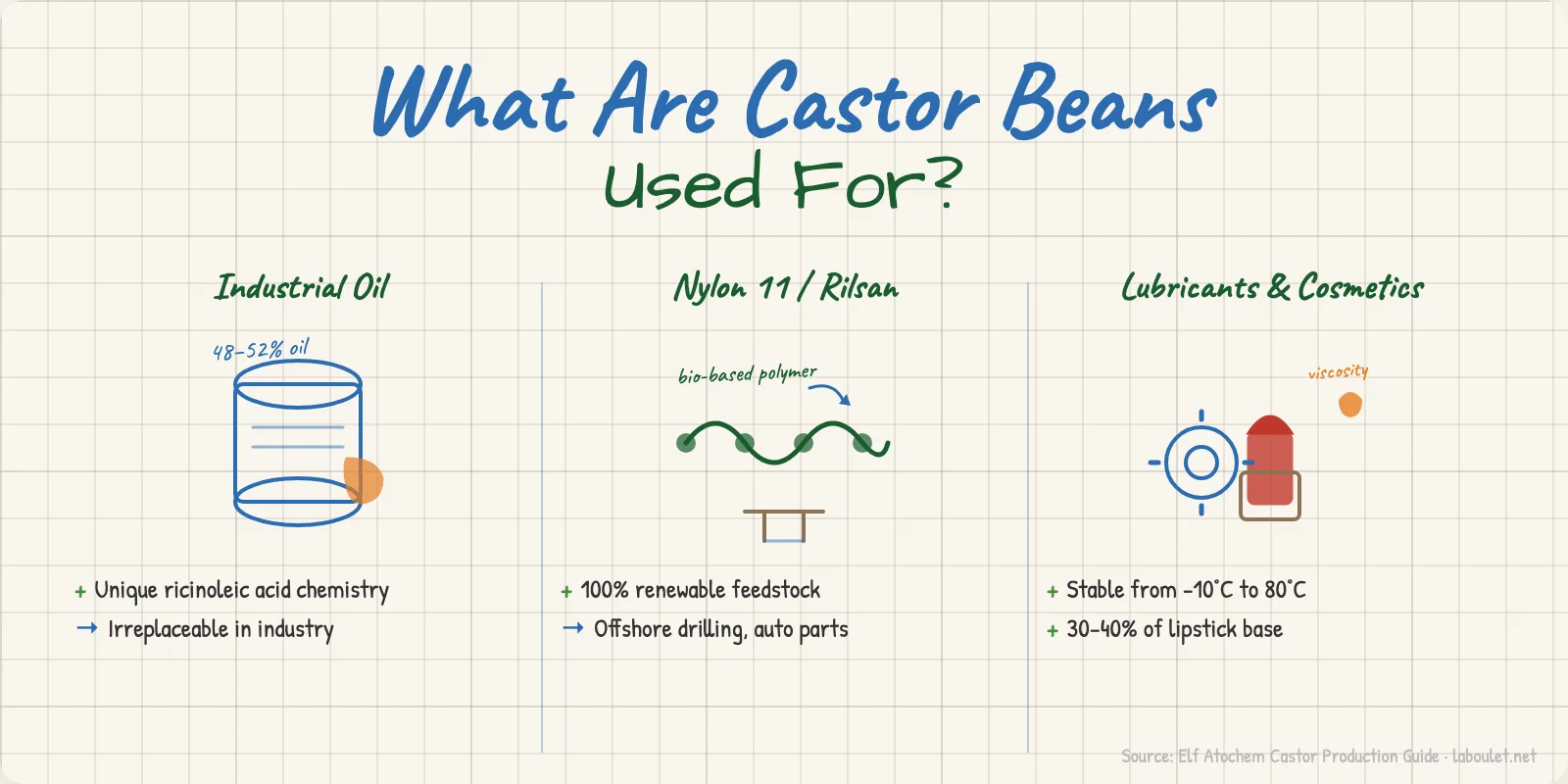
Few crops can match the industrial versatility of the castor bean (Ricinus communis L.). A single hectare of well-managed castor plants produces hundreds of kilograms of seeds containing up to 57 percent oil — an oil unlike any other vegetable oil in the world. That oil fuels industries as diverse as aerospace, cosmetics, high-performance polymers, […]
Read moreHybrid castor seeds bring improved uniformity, vigor, and yield stability to oilseed production systems. Their genetic combination supports regular emergence, balanced growth, and predictable reproductive behavior under diverse environmental conditions. These traits help producers secure consistent technical performance while managing variable climates and soil structures.
Laboulet develops hybrid castor seeds through a structured varietal-creation process focused on productivity, early-cycle behavior, and agronomic regularity. Our varieties are evaluated across multiple sites to validate yield potential, oil accumulation, and crop uniformity. Seed production follows strict protocols to ensure purity, germination capacity, and physiological quality, offering reliable technical foundations for castor cropping.
Yield is a central criterion when choosing hybrid castor seeds. High-performing hybrids combine strong early vigor, efficient energy allocation, and stable seed formation. These characteristics support consistent results under both favorable and constrained agronomic environments. Our varieties undergo multi-site evaluations to validate their productivity profile.
Precocity influences risk management and harvest logistics in castor production. Early-cycle hybrids help reduce exposure to late-season constraints, ensure better grain maturity, and improve integration into rotations. Our varieties are selected for rapid emergence, balanced vegetative phases, and timely raceme initiation.
The performance of hybrid castor seeds is linked to robust agronomic profiles. Stem strength, uniform flowering, capsule regularity, and an efficient root system influence crop stability and operational reliability. Laboulet characterizes these traits through structured field trials and long-term varietal assessments.
Hybrid castor seeds must integrate efficiently into various rotation systems. Their influence on soil structure, nutrient uptake, and water use efficiency determines the best placement in multi-crop sequences. Our varieties are tested under different soil types and rotational contexts to confirm broad compatibility.
Laboulet’s hybrid castor seed range is built around early-cycle stability, oil yield potential, and uniform agronomic performance. Each variety undergoes multi-year and multi-site evaluations to ensure technical reliability. These solutions address the needs of farms seeking consistent behavior and predictable oilseed output.
A properly prepared seedbed supports regular emergence and reduces early vegetative stress. Hybrid castor seeds benefit from moderate moisture, controlled sowing depth, and spacing adapted to soil potential. Early sowing is suited to early-cycle varieties when soil temperature supports rapid germination.
Castor hybrids require balanced fertilization to support stem development, capsule formation, and oil synthesis. Nitrogen must be controlled to avoid excessive vegetative growth, while phosphorus and potassium ensure root efficiency and seed fill. Micronutrients help maintain reproductive performance.
Although hybrids provide improved tolerance to common castor diseases, preventive crop management remains essential. Rotation planning, field monitoring, and balanced nutrition help limit disease expression and maintain regular crop behavior.
Harvesting at the right stage preserves seed integrity and supports consistent oil content. Uniform hybrid maturity simplifies this step and ensures predictable moisture levels at collection.
A hybrid castor seed results from controlled crossbreeding between selected parental lines, producing enhanced vigor and predictable agronomic traits.
Selection depends on yield goals, soil structure, rotation intensity, and climate. Early-cycle behavior, tolerance levels, and productivity indicators help define the best fit.
Early-cycle hybrids limit exposure to late-season stress, stabilize maturity, and support better harvest scheduling.
Hybrids offer stable emergence, balanced vegetative growth, and regular reproductive phases, even under changing environments.
Hybrids with controlled growth and predictable maturity adapt well to intensive rotations requiring precise timing.
Stem strength, uniform flowering, and inherent tolerance traits influence disease response under field pressure.
Well-structured soils with moderate moisture and balanced nutrient availability favor optimal hybrid performance.
Uniform capsule maturity, dryness level, and seed moisture content determine the most appropriate harvest timing.
To broaden the comparison across hybrid programs, many producers also review our hybrid sunflower seeds and hybrid corn seeds, which follow the same focus on precise varietal development targeting productivity, precocity, and reliable agronomic regularity across environments.